Power rarely announces itself when it is growing. It doesn’t kick down the door. More often, it slips quietly across a boundary while everyone is busy applauding the reason it crossed.
Donald Trump just won an important battle over the way America conducts elections.
But he may also have opened a constitutional question considerably larger than mail-in ballots, citizenship verification or even the 2026 midterms:
Who actually has the power to make the rules governing American elections?
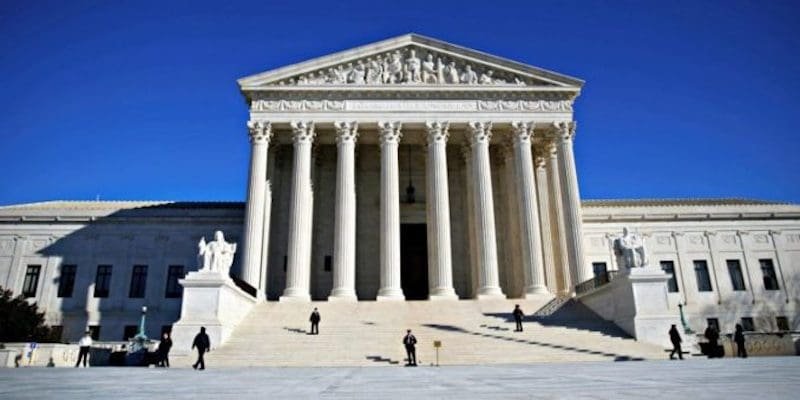
On August 24, the Supreme Court, in a 6-3 decision, allowed the Trump administration to move forward, for now, with significant portions of Executive Order 14399, Ensuring Citizenship Verification and Integrity in Federal Elections.
For supporters of election integrity, there is much in Trump’s order to like.
The order directs the Department of Homeland Security, working with the Social Security Administration, to compile citizenship lists for states using federal records. It also directs the U.S. Postal Service toward new procedures governing ballots traveling through the mail, including secure ballot envelopes, unique Intelligent Mail barcodes and a system involving state-provided lists of voters authorized to receive mail ballots.
The premise is straightforward: if federal law prohibits noncitizens from voting in federal elections, the federal government should use information already in its possession to help enforce that prohibition.
That’s an argument worth taking seriously. But so is another one.
Where does the president get the power to do this?
The Constitution is easiest to defend when it restrains someone we oppose. The real test is whether we will defend it when it restrains someone we trust.
The Constitution deliberately makes governmental power difficult to exercise. Authority is divided between Washington and the states and among the legislative, executive and judicial branches.
When it comes to congressional elections, Article I, Section 4, the Elections Clause, provides that the “Times, Places and Manner” shall initially be prescribed by state legislatures. It then gives Congress the power to “make or alter” those regulations.
Notice who isn’t mentioned. The president.
That doesn’t mean presidents have no authority involving elections. The executive branch enforces federal statutes, administers federal agencies and carries out laws Congress has enacted.
The administration’s argument is that Article II requires the president to faithfully execute federal law, including laws prohibiting noncitizen voting and election fraud.
But directing federal agencies to enforce laws Congress enacted is one thing. Creating mechanisms that substantially affect how states administer elections may be another.
There is a dangerous distance between enforcing the law and becoming the law. Constitutional republics survive by refusing to pretend that distance doesn’t exist.
And contrary to some of the political celebration surrounding the ruling, the Supreme Court did not decide that Trump’s election order is constitutional.
Twenty-three states and the District of Columbia challenged portions of the executive order. A federal district court blocked key provisions, and the administration sought emergency relief from the Supreme Court.
The Court granted it.
But the majority’s reasoning turned largely on standing, the requirement that someone suing the government demonstrate an actual or sufficiently imminent injury. The Court concluded that the states had gone to court too soon.
More importantly, the Court cautioned that allowing implementation to proceed does not mean everything ultimately done under the order will necessarily be lawful.
“Time will tell,” the Court wrote.
Those three words may prove more important than the victory itself.
Implementation is already producing new litigation. USPS issued its Ballot Mail for Federal Elections rule, states challenged it, and a federal district judge subsequently temporarily blocked major portions while that litigation proceeds.
So this isn’t over. It may barely have begun. Conservatives in particular should resist treating the constitutional question as an attack on Trump. There is a larger principle at stake.
If presidents may exercise power simply because their objective is popular with their political supporters, constitutional limits become dependent upon who occupies the Oval Office.
That isn’t constitutional government. That’s permission.
Imagine the same theory of presidential authority in the hands of a president whose agenda you despise.
Suppose a future Democratic president declared that “election access” required nationwide standards for ballot distribution, mail voting or voter registration and ordered executive agencies to impose them without Congress.
Would conservatives accept the argument that the president was merely enforcing federal election law? I doubt it. Nor should they.
Power has no party loyalty. Once surrendered, it does not politely return home when your side loses an election. None of this means abandoning election integrity.
Noncitizens should not vote in federal elections. Federal law prohibits it. Election systems should be auditable. Ballots traveling through the mail should be secure. States should maintain accurate voter rolls. But constitutional government demands more than a desirable outcome. It demands lawful authority to achieve it.
If Congress believes citizenship databases should be incorporated into federal election administration, Congress can legislate. If Congress believes nationwide standards are necessary for ballots traveling through USPS, Congress can legislate.
Members then have to vote. Their constituents can hold them accountable. Courts can examine the resulting statute. That cumbersome process isn’t a defect in our constitutional system. It is the system.
For decades, presidents of both parties have expanded executive authority while Congress has increasingly surrendered responsibility for difficult decisions. Americans cheer executive action when their president uses it, then rediscover separation of powers when the other party takes office.
Trump’s election order therefore presents conservatives with a valuable test: Can we support citizenship verification and election integrity while still demanding constitutional limits on the means used to achieve them?
We should be able to.
The Supreme Court has not yet told us where that constitutional line ultimately lies. It has allowed the administration to move forward while the courts sort out what agencies actually implement and whether those actions are lawful.
Because Donald Trump will leave office someday. The precedent won’t pack its bags with him. Presidents are temporary. Power is patient.
Today the power may be used to secure an election. Tomorrow it may be used to reshape one.
The Constitution was never written to guarantee that the right people would hold power.
It was written because the Founders understood that eventually, the wrong people would.